
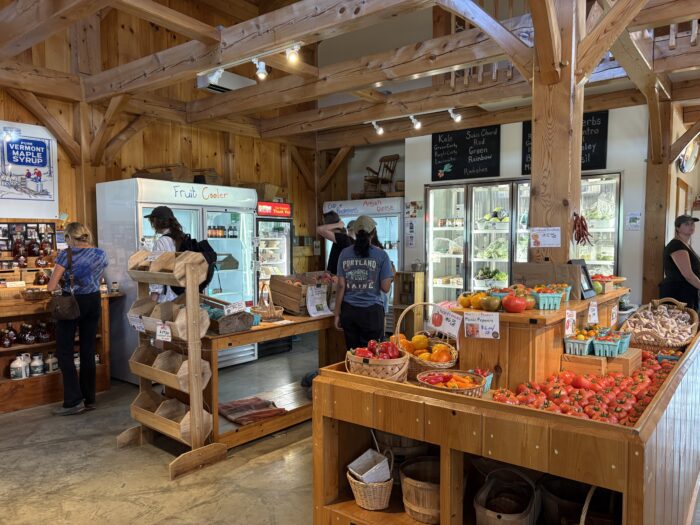
While global supply chains have brought year-round abundance to families at the grocery store, it has come at a cost, particularly for small and mid-sized farmers right here at home. Consolidation of food distribution and retail has forced farmers to consider higher volume sales at lower prices, which can be difficult to consider while maintaining profits for small and mid-sized operations. However, with recent federal investments and local leadership, there has been a clear and growing desire among schools and food pantries to purchase fresh, nutritious foods from those very farms in their own backyards.
The concept of purchasing food locally with government funding is not new. However, a series of investments – beginning with the Farmers to Families Food Box Program – have spurred the development of regional food supply chains both within state borders and across state lines. This development has created stability and opened market opportunities for local businesses while bringing fresh, wholesome food to local communities. Understandably, this success has grabbed the attention of participating farmers, businesses, and food system stakeholders, in addition to the press, and most recently Congress.
Different bills, similar outcomes
In July 2025, two bipartisan bills introduced in the Senate and the House outline pathways to codify immensely popular and successful local food programs. Senators Jack Reed (D-RI) and Jim Justice (R-WV) introduced the Strengthening Local Food Security Act (S. 2338), and Representative Robert Bresnahan (R-PA-8), along with 10 of his colleagues, introduced the Local Farmers Feeding our Communities Act (H.R. 4782) the following week.
Each bill directs the US Department of Agriculture (USDA) to enter into cooperative agreements with state agencies, Tribal governments, and US territories, to provide them with funding to purchase and distribute local food to communities in need. While each program would funnel wholesome foods into food-insecure communities, the primary focus of each is to expand economic opportunities for small- and mid-sized farms, beginning and veteran farmers, while strengthening regional food networks.
The critical element of each of these bills’ potential successes is the cooperative agreement model. By empowering local and state entities to make the purchasing decisions:
- Farmers of all sizes can readily participate.
- Food dollars remain in the state, reaching areas often underrepresented in federal funding.
- Families receive fresh food that directly reflects their preferences and needs.
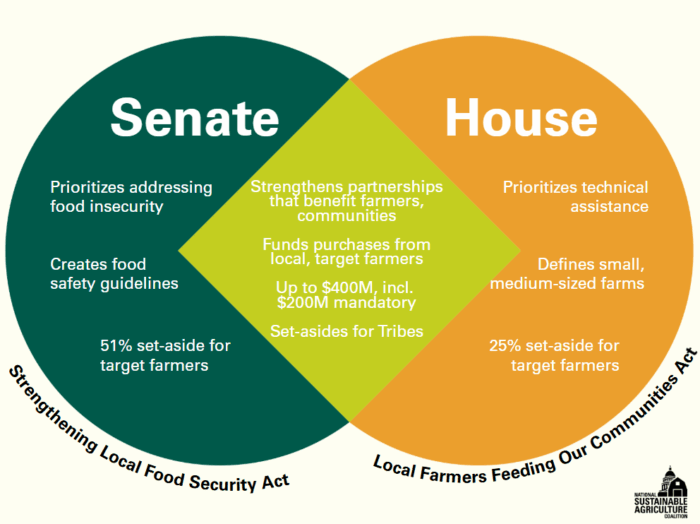
The two bills largely accomplish the same goal with slight variations in implementation directives. The
LEARN MORE
Securing the future of local food systems
The local food programs laid out in the Strengthening Local Food Security Act and the Local Farmers Feeding our Communities Act would create new, reliable markets for farmers while better connecting them with consumers and families in their communities. These investments will catalyze and strengthen a burgeoning local food sector that can expand beyond federal nutrition programs.
But in order to succeed, Congress must adequately invest in local food economies, and not just commodity markets. Congressional members need to hear how local foods are important to your business, health, and community well-being.
Full Blog Post published Sept. 10, 2025 by National Sustainable Agriculture Coalition