Food markets are essential components of urban food systems around the world. For local communities, these vibrant and often bustling spaces are key access points for fresh and affordable produce. However, as market stalls empty throughout the day, waste bins fill up with bruised fruit, vegetable trimmings, spoiled food, and expired goods — all usually mixed with other trash. This organic waste represents a significant opportunity for energy and nutrient recovery for local communities, while also reducing methane emissions.

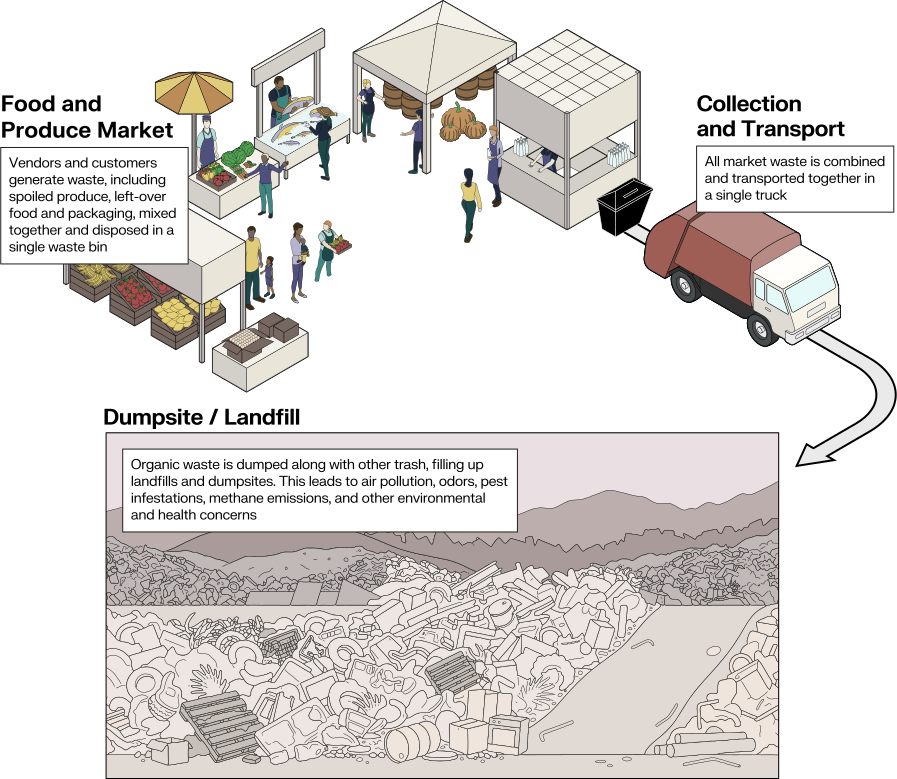
A market’s waste is typically hauled to a dumpsite or landfill, where the organic material decomposes in low-oxygen conditions and produces methane, a potent greenhouse gas. Unless captured, that methane escapes into the atmosphere and contributes to near-term warming — methane traps over 80 times more heat than CO2 over a 20-year time frame. Poorly managed organic waste can also stink, attract pests, and threaten to overwhelm disposal facilities quickly nearing capacity — all while missing the opportunity to recover nutrients and energy.
A Circular Alternative
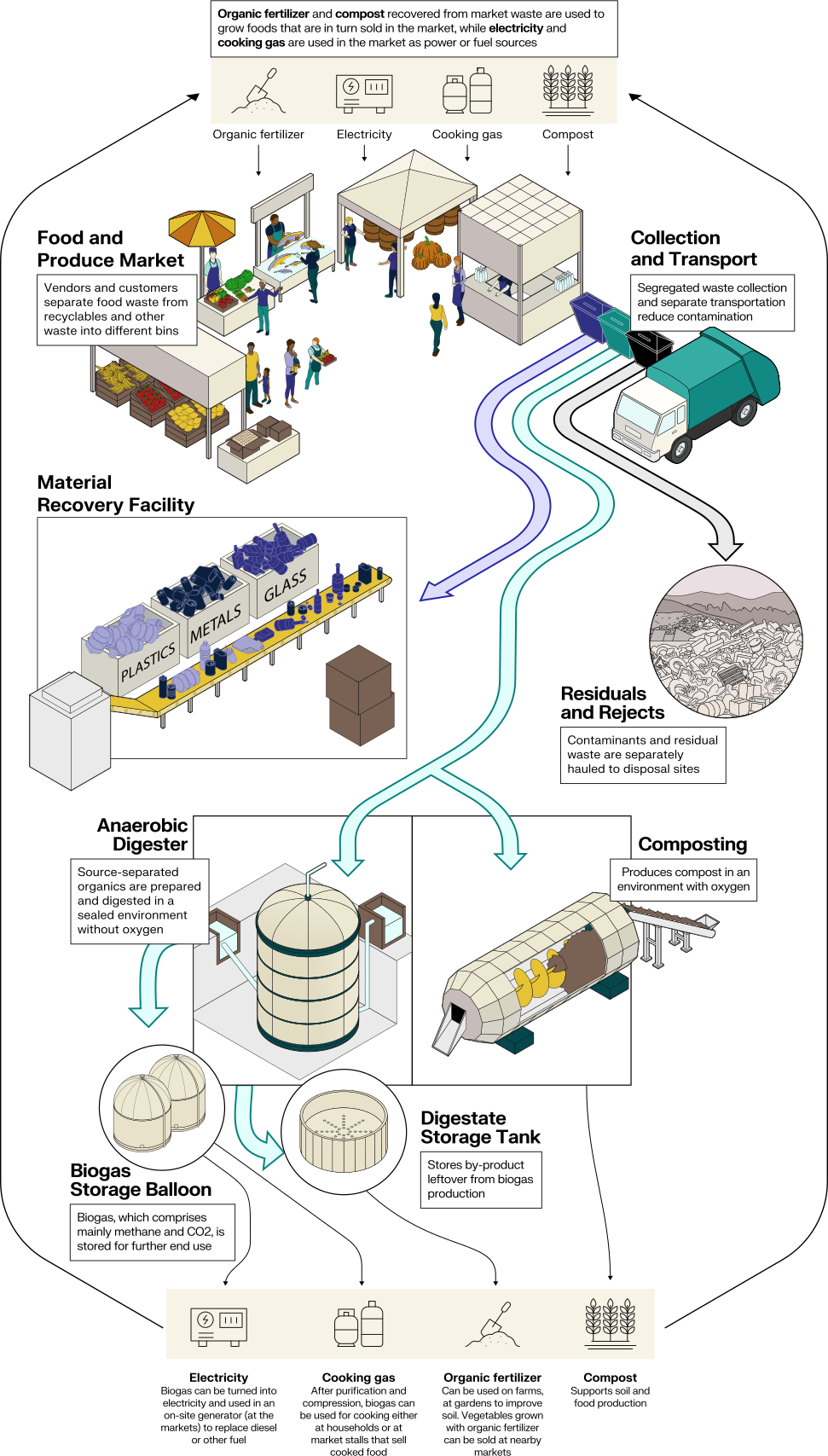
Adopting a more circular approach to waste management could seize the opportunity for nutrient and energy recovery, starting from where waste is generated. Organic waste from food markets can be directed toward two well-established treatment options: composting, to improve soil quality, or anaerobic digestion, for energy production. The site-specific technology choice depends on the amount and type of waste, land, and funding available, as well as operator capacity and demand for the end products generated.
READ MORE … about Composting, Anaerobic Digestion and supporting expansion of organic waste treatment.


